INSURANCE
Why Is Tesla Insurance So Expensive? 7 Real Reasons — and How Owners Pay Less
If you have ever quoted insurance on a Tesla, you already know the feeling: the car is reasonably priced, the running costs are low, and then the insurance quote arrives and wipes out the savings. On average, insuring a Tesla costs about $4,512 a year for full coverage, according to Insurance.com — roughly 50% more than the $3,037 national average for all vehicles. A Model 3 averages $3,871 a year and a Model Y about $3,836.
This is not insurers being greedy. The premium follows the claim bill, and Tesla claims are expensive for structural reasons. Here are the seven real ones.
1. Aluminium bodies that get replaced, not repaired
Teslas use aluminium-intensive unibody construction, and newer models add giant single-piece castings — “gigacastings” — that replace dozens of separate parts with one huge piece. That makes the car lighter and stronger, and it simplifies the factory. But after a crash, a damaged section often cannot be straightened and patched the way a steel panel can. The whole piece comes out and a new one goes in, with more labour and a bigger parts bill. A moderate rear-end hit that would be a $1,500 panel job on a conventional car can push past $15,000–$20,000 on a Tesla and even trigger a total-loss decision on a car that still drives.
2. Cameras and sensors everywhere — and they all need recalibrating
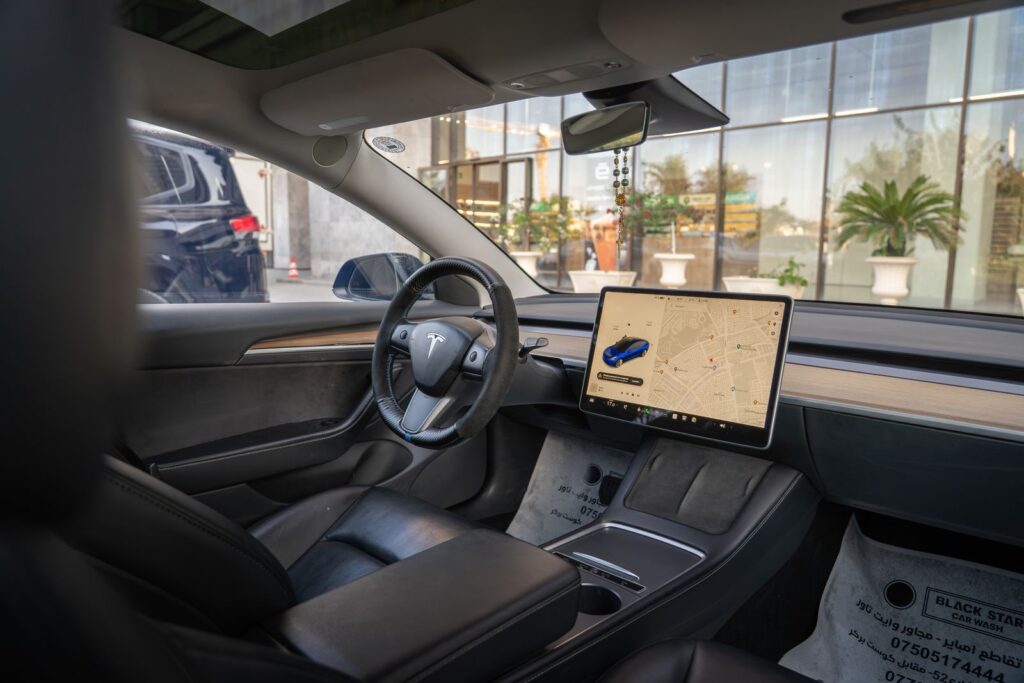
A Tesla is covered in cameras and sensors: in the windshield, the fenders, the pillars. They run Autopilot and the safety systems, and after even a minor collision they usually need recalibration by a trained technician. The industry group AAA reports that driver-assistance repairs can add 38% to the total cost of a repair, and even minor damage to these systems can cost more than $1,500. A windshield replacement on a Model Y is not a $300 job — with camera recalibration it runs roughly $900 to $1,400. Every one of those costs lands on the insurer, and the insurer passes it on.
3. The battery pack is the most expensive part of the car
The battery is the single most expensive component in any EV, and Tesla’s packs are not built to be repaired in small pieces. A curb strike or road debris that dents the battery enclosure can mean a full pack replacement costing $12,000 to $20,000 or more. Catastrophic battery damage is statistically uncommon, but insurers price tail risk — the rare, enormous claim — into every policy. That is part of why the premium stays high even for careful drivers who never claim.
4. Only a small network of shops can fix them
Most independent body shops cannot repair a Tesla. The work needs Tesla certification, specialised welding equipment for aluminium, and technicians trained on high-voltage systems. So repairs funnel into Tesla’s own service centres and a small network of approved shops, which can charge premium labour rates — often $175 to $225 an hour against $120 to $150 at a conventional shop. Less competition means higher prices, and higher prices mean higher premiums.
5. Parts take weeks — and the rental car clock keeps running
Tesla controls its own parts distribution, and there is almost no aftermarket for Tesla parts. When a proprietary component is back-ordered, owners can wait weeks, and the insurer keeps paying for a rental car the whole time. Insurers price in both the parts cost and the rental days that pile up during the delay.
6. The car is worth a lot — and gets written off sooner
Teslas are expensive cars, and because their repair costs run so high, insurers declare them a total loss at lower damage levels than a comparable petrol car. The Insurance Information Institute’s Janet Ruiz puts it plainly: electric vehicles are often more expensive to insure because of the cost of repairs, parts and labour and the availability of repair facilities. Repair estimates for a Tesla average about $3,914, against about $1,629 for a Honda, according to body-shop marketplace data reported by Insurance.com. When the average repair costs more than twice as much, the premium has to follow.
7. Performance that invites bigger claims
Teslas are fast — a Model 3 Performance reaches 60 mph in about 3.1 seconds — and insurers connect that acceleration with more severe claims. It is not that Tesla drivers crash more often; it is that when a high-powered car is involved in a crash, the damage tends to be worse. The Performance trims carry the highest premiums in the Tesla range for exactly this reason.
What about Tesla’s own insurance?
Tesla sells its own insurance, and it works differently from a regular policy. According to Tesla’s own insurance page, it is “powered by Safety Score”: the car tracks your driving behaviour and your monthly rate moves with your score, so safe driving is directly rewarded. You buy and manage the policy through the Tesla app, and you can file a claim there too.
For careful drivers it can be genuinely cheaper — some reports put it well below the market average in states where it is offered. But it is only available in about a dozen US states, and it is not automatically the cheapest option for everyone. The right move is to get a quote from Tesla Insurance and compare it with quotes from regular insurers.
How Tesla owners actually pay less
- Shop three or four insurers. The spread between companies for the same Tesla and the same driver is over $3,000 a year in published comparisons. Nothing else you do matters as much as this.
- Get a Tesla Insurance quote if your state offers it, and let your Safety Score work for you.
- Pick the cheaper trim. A Long Range instead of a Performance typically saves $400–$700 a year on insurance alone.
- Raise your deductible with your eyes open. Ask for quotes at $500 and $1,000 deductibles and compare the yearly saving against the extra $500 you would pay after a claim.
- Bundle home and auto, and ask about every discount — autopay, paperless, low mileage, good credit where insurers may use it.
- Keep your record clean. A ticket or an at-fault accident raises a Tesla premium for years, because the claim costs behind it are already high.
- Re-shop at every renewal. Insurers change how much they want Tesla business from year to year. The cheapest quote last year may not be the cheapest this year — which is one reason so many Americans are switching insurance companies in 2026.
The bottom line
Tesla insurance is expensive for reasons you can see in a body shop, not on a spreadsheet: aluminium bodies, single-piece castings, cameras that need recalibrating, battery packs that cost five figures, a small repair network and parts that take weeks. None of that is going away soon — but the insurer you choose, the trim you buy and the way you drive can move the premium by thousands of dollars a year. Quote widely, and quote before you buy the car.
For the full picture of how Tesla’s own coverage works, see our complete Tesla Insurance guide.
Frequently asked questions
Why is Tesla insurance so expensive compared with other cars?
Because Teslas cost more to repair: aluminium construction and single-piece castings, cameras and sensors that need recalibration, expensive battery packs, a limited network of certified repair shops, and proprietary parts that can take weeks to arrive. The average Tesla repair costs about $3,914 against about $1,629 for a Honda.
Is Tesla Insurance cheaper than regular car insurance?
It can be for safe drivers. Tesla Insurance prices your monthly premium from your Safety Score, so careful driving is rewarded directly. But it is only offered in about a dozen states, and it is not the cheapest option for every driver — always compare it with quotes from regular insurers.
Do all Teslas cost the same to insure?
No. The Model 3 and Model Y are the cheapest to insure, averaging about $3,871 and $3,836 a year for full coverage. The Model S and Model X cost considerably more, and within each model the Performance trim costs more than the base or Long Range versions.
Will Tesla insurance get cheaper?
It may ease over time as more repair shops get certified, parts become easier to find and more claims data exists — but there is no guarantee, and no date anyone can promise. The practical move is to re-shop your policy at every renewal and let competition do the work.
This article is for general information only and is not financial advice. Insurance rates change often and vary by state, driver and insurer — always get a current quote and check the policy details with a licensed agent or the insurer before you buy.
